Amongst the most precious items in my family archive are the letters that my great grandmother, Ruth Pursglove, wrote to my grandmother after she left home to work in service towards the end of 1913.
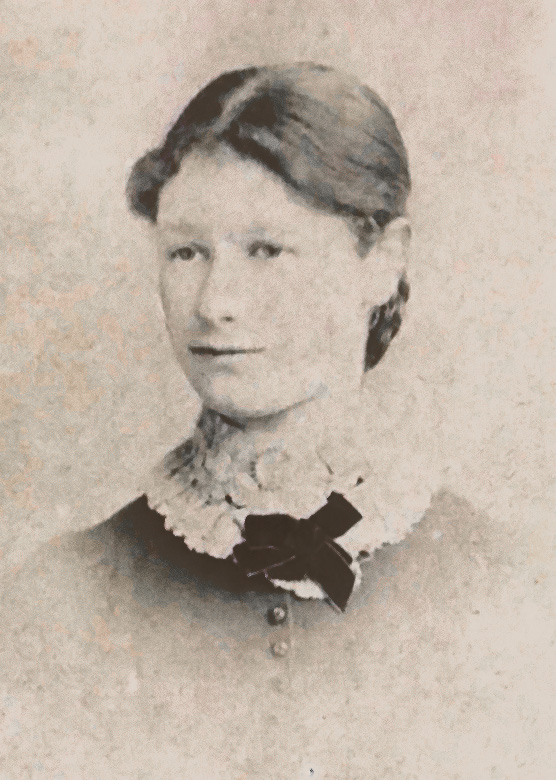
Ruth was born on 8 November 1867 in Wyddial, Hertfordshire and this photograph shows her around 1890 when she would have been in her early 20s.
She was the daughter of George Pursglove and his wife, Eliza Ginn, and grew up on the farms where her father was working as a bailiff, initially in Wyddial, Hertfordshire and later a few miles away in Great Hallingbury, Essex.
Although the family were not wealthy, Ruth and her younger sister, Eliza, both remained living at home until they got married and the census records do not suggest that they needed to work to support the family.
In 1894, Ruth married gamekeeper Walter Henry Howe and although they were married in Hertfordshire, where her parents had returned to live, it seems likely that they met when the Pursgloves were in Great Hallingbury as the Howes’ first three children were all born there.
In all, Ruth and Walter Howe had eight children:
Oscar (1895), Mildred (1896, my grandmother), John (1898, always known as Jack), Dorothy (1900), Raymond (1903), George (1905, died in infancy), Ada (1908) and Dennis (1912).
Written from The Gables Cottage on the Thorrington Estate in Suffolk, Ruth’s letters span the years 1913 – 1919, providing a remarkable insight into life in rural Suffolk during WWI as well as documenting a close and affectionate relationship between a mother and her eldest daughter.
In her early letters, Ruth narrates a lively and often humorous account of her life in the country. She complains, gently, that her large family has kept her poor all her days, and is often exasperated by the constant mischief making of her younger children. Snippets from her day to day life include picking nuts, bottling fruit and making jam, and there is always plenty of local gossip to share. She also reports on her efforts to keep “dad” in check and shares news of his gamekeeping exploits, mentioning pheasant and partridge shoots which on one occasion left her astonished that a parson had been amongst the guns – apparently he was a rotten shot !
As the war progresses and eldest son Oscar joins up, the letters are full of news about him, avidly gleaned from many sources, and she is always keen to know whether my grandmother has written to or heard from her brother. From an early stage, Ruth is clearly all too aware of the grim conditions that the young soldiers had to endure, and the list of local men who have been lost grows ever longer. She tries very hard to make her son’s life more bearable by knitting him socks and gloves, as well as sending him regular parcels of cakes, apples, “fags” and newspapers, complaining about the outrageous cost of postage each time.
In January 1917 she writes movingly about having had all her family together once again when Oscar was home on leave, but just a few months later her beloved son was killed in action and after that Ruth’s letters are simply those of a grieving mother. By this time, life was clearly also hard financially, with rationing a constant battle and her husband’s job in jeopardy as the estates he relied on for work sank into decline. The light heartedness is gone, as is the gossip, and she writes a great deal about her sadness, the comfort she derives from the visits of Oscar’s comrades and her anxiety as her second son, Jack, follows his brother to war and is reported missing in April 1918.
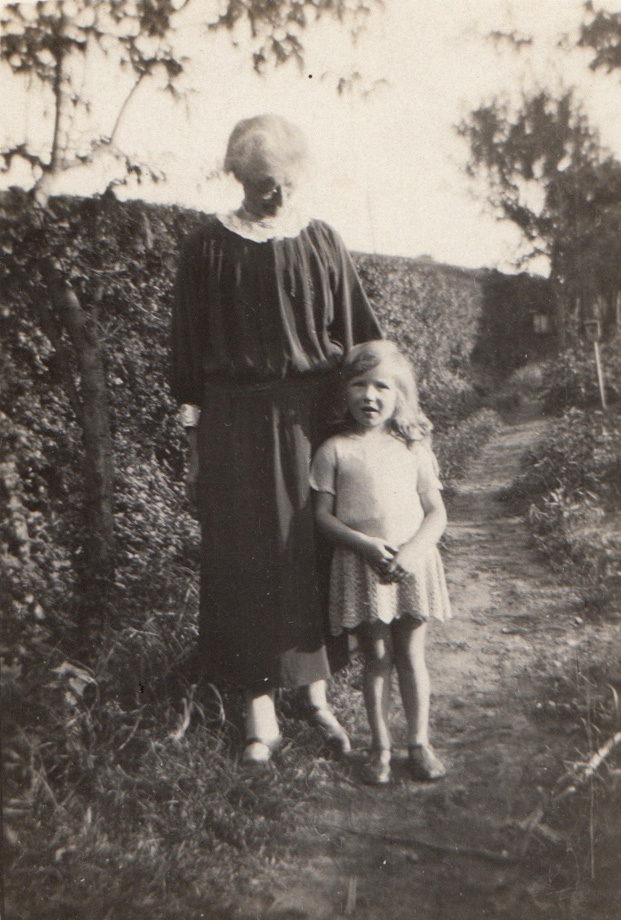
My mother was named Ruth after her Granny Howe and they are pictured together in this photograph from around 1930.
Mum spent many happy childhood holidays with her namesake and remembered her fondly as a kind, affectionate and gentle countrywoman who always carried the faint air that distinguished her as “sad granny”.
Ruth Howe née Pursglove died in 1933 at the age of 66. She always signed off her letters to my grandmother with the same words:

 Sleuthing Notes