In the only photograph that I have of my paternal grandmother, Flora Clark, she is dressed in a nurse’s “walking out” uniform – I have already included the image in an earlier post [see Challenge] but am re-posting it here for ease of reference.
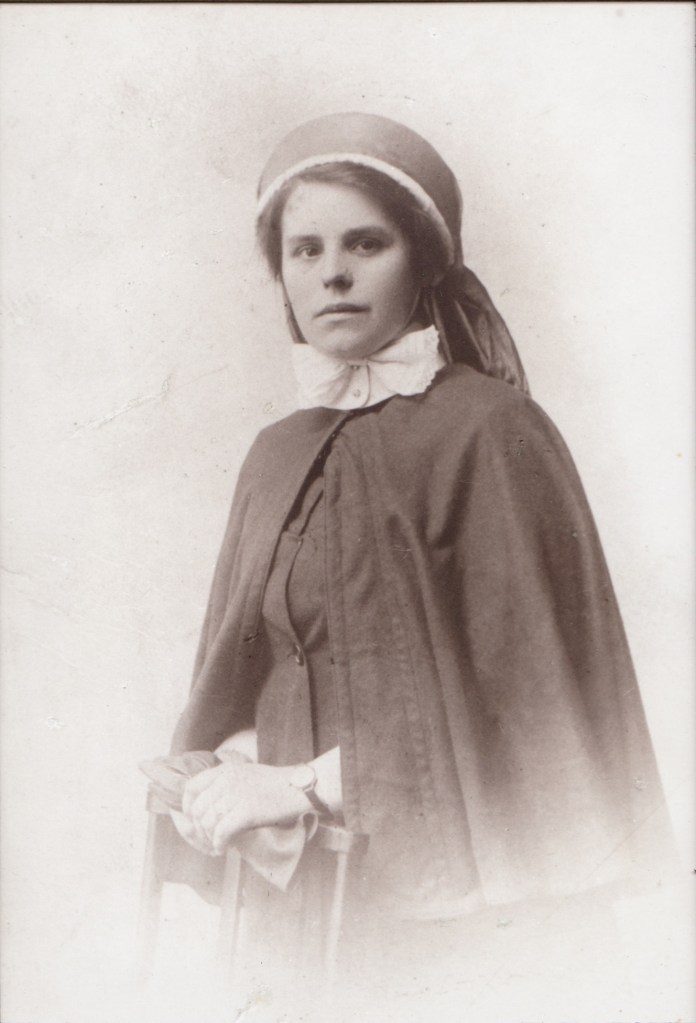
A Service Register held by the Hampshire Records Office reveals that from 3 January 1918 – 17 March 1919 Flora worked as an under nurse in three mental health institutions: Milton Asylum in Portsmouth, Wiltshire County Asylum in Devizes and Knowle Hospital in Fareham.
Her annual salary was £31 and she was provided with board, lodging and a uniform. Although her conduct and efficiency were both noted as fair, her nursing career proved to be short lived as she was given a month’s notice due to unsuitability, and married my grandfather shortly afterwards.
On 25 January 1919, my maternal grandmother, Mildred Howe, also began working as a mental health nurse at St Audry’s Hospital in Woodbridge, Suffolk. Her commencing salary was £21, plus board, lodging, washing and uniform valued at £35.
It may seem strange that both of my grandmothers began working as mental health nurses around the same time, but there had been a major expansion in provision as the life expectancy of long-term inmates improved and damaged soldiers returned from the WWI battlefields, and it became a popular route out of domestic service. In 1919, a housemaid could expect to earn around £12 a year so nursing offered much better pay in addition to greater freedom and, for intelligent young women with few career options, provided the opportunity to derive a sense of satisfaction from their work. My grandmother’s younger sister, Dorothy Howe, was also a nurse at St Audry’s, entering service on the same day as my grandmother.
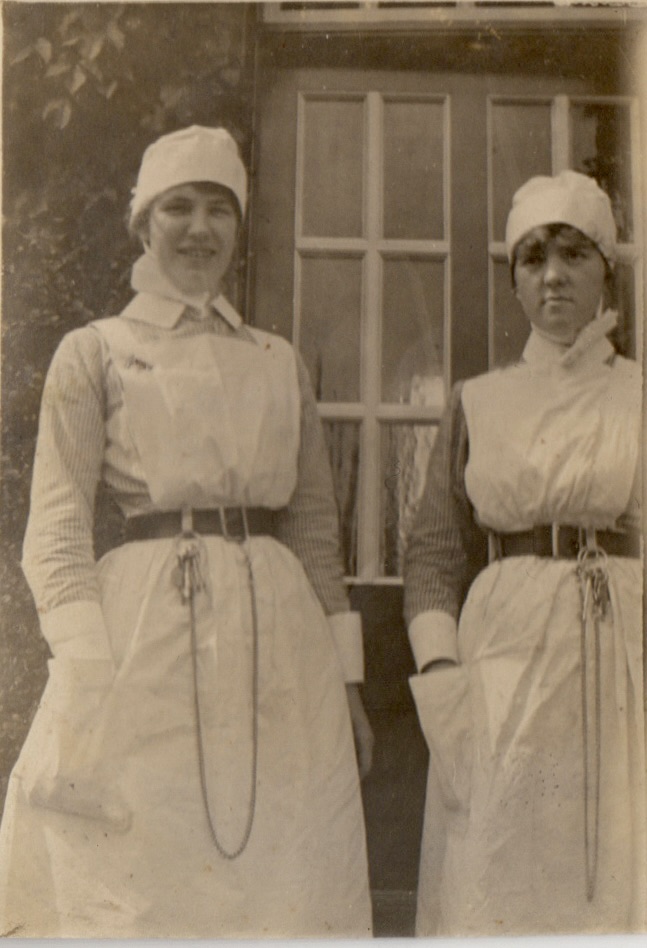
This photograph of my grandmother (on the left) is undated, but captioned “taken in our courtyard”, and Mildred’s experience appears to have been somewhat happier than Flora’s as she often spoke fondly of her years at the hospital, particularly the fun she had living with her friends in the nurses’ accommodation.
The 1921 census provides an intriguing snapshot of the staff and patients living at St Audry’s. The Medical Superintendent was a 58 year old bachelor named Dr James Richard Whitwell, who had taken up the post in 1896, and the Chief Nurse was Phoebe Allen, who was also unmarried. In total, 52 nurses are listed, 9 of them male, and most of them are in their 20s like my grandmother. Together with a range of other staff, which included cooks, laundry maids and a photographer, they were responsible for just over 900 patients.
Although early Victorian asylums were notorious for their harsh treatment of inmates and the use of physical restraint, by the end of the 19th century a much more therapeutic approach had evolved where recovery and rehabilitation were the goal rather than incarceration. Dr Whitwell’s predecessor at St Audry’s, Dr John Kirkham, was seen as a pioneer in this transformation and he is quoted as stating that “no restraint can be employed which is so powerful as tenderness”.
Both doctors firmly believed that the hospital should resemble a home setting so the wards had plants, flowers, paintings and even birds and animals. Keeping the patients gainfully occupied was a priority, with nurses encouraged to interest them in games, books, art, sports and even dances. Occupational therapy was considered equally important to rest and relaxation, with patients working outdoors on the hospital farm and in the gardens as well as in small workshops and the hospital laundry.
My grandmother worked at St Audry’s for six years, resigning on 19 August 1925 in preparation for her marriage to my grandfather, Jack Cullingford. Apparently he used to cause quite a stir when he visited her at the hospital as the other nurses would spot him from the window and wonder who such a good looking young man had come to see.
 Sleuthing Notes