
My paternal grandfather, Frederick Maitland, was born in Portsmouth on 1 June 1886.
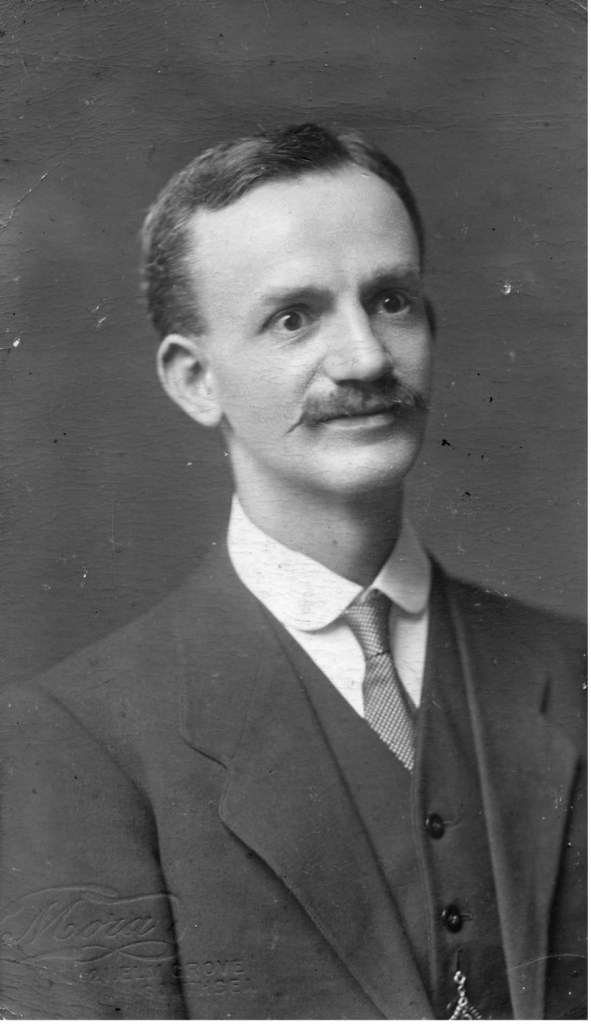
Employment records show that in 1902 he became an apprentice in the Royal Dockyard, aged 14, and that he was still employed there as an engine fitter when he died in 1951 at the age of 64.
My father recalled that he was a skilled worker who would often be away from home for prolonged periods during the sea trials of newly launched warships. Like many Dockyard workers, Frederick would apparently spend 25 minutes walking home at lunchtime, eat his lunch in the space of 10 minutes and then walk back to work.
Although he was baptised into the Church of England, following the tradition of his ancestors, his marriage certificate reveals that by the time Frederick married my grandmother in 1919 he had become a Methodist.

Both of his sons were also baptised in the Stamford Street United Methodist Church, which was just around the corner from the Maitland family’s home in Harley Street [see Home Sweet Home]. Built in 1861, it was to play a central role in my grandfather’s life and he eventually became a Local Preacher in 1938.
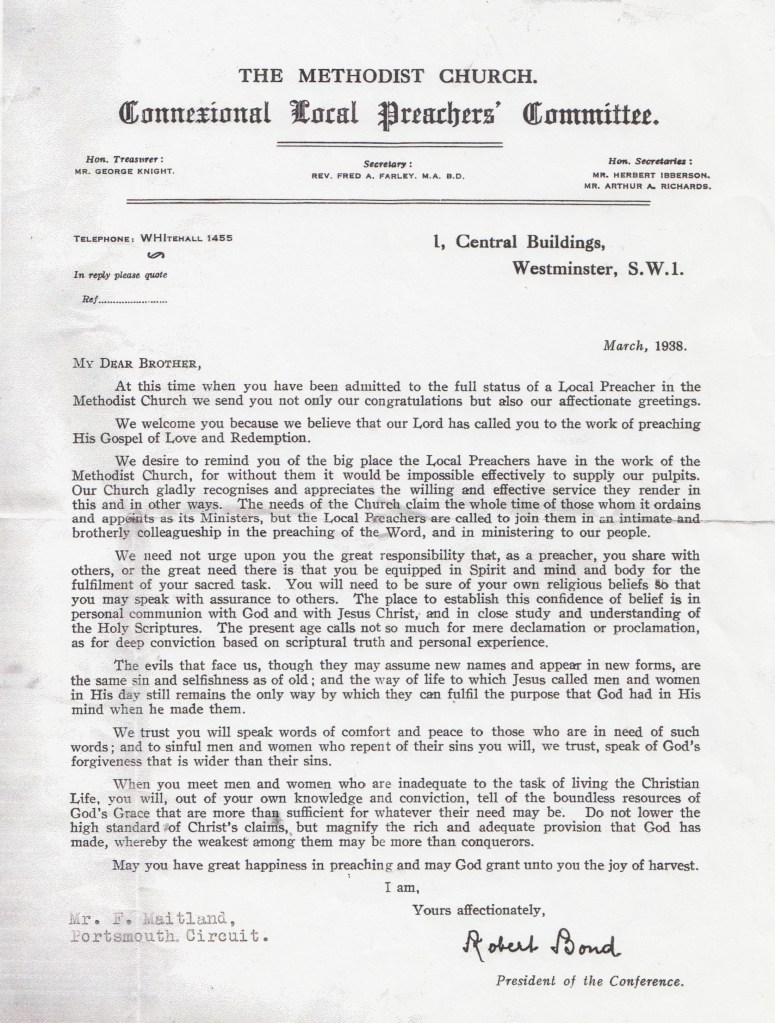
A Local Preacher is a layperson who has been accredited by the Methodist Church to lead worship, conduct pastoral duties and establish a strong presence in their local community. I don’t know what my grandfather’s motivation was, but during the early part of the 20th century it was not uncommon for skilled working class men to be drawn to taking on this role as it was one of the few ways in which they could acquire an education and the status of a leader within their community.
Although I have no evidence for Frederick’s political leanings, there is a strong link between Methodism and the developing labour movements in industrial cities at the turn of the 19th Century, and many founders of the trade unions were Local Preachers. “The Labour Party owes more to Methodsim than Marx” is a famous quote, attributed to Morgan Philips, General Secretary of the Party, and the heightened social awareness of the time certainly aligned closely to Methodism’s strong sense of justice and the encouragement of self-improvement.
So far I have found no evidence that any other members of the family were Methodists, so my grandfather’s decision seems to have been an outlier and very much a personal choice. My father was also to make his own choice and despite, or perhaps because of, his strict religious upbringing, his attendance at church was limited to the occasional baptism, marriage or funeral in all the years I knew him.
Sadly, I have been unable to find an image of Stamford Street Church, which was damaged beyond repair by a wartime bomb on 18 February 1941.
 Sleuthing Notes