I have already written about the letters that my grandmother, Mildred Howe, received from her mother but I also have three others that were sent to her by an earlier ancestor – my great great grandmother, Sophia Grant.
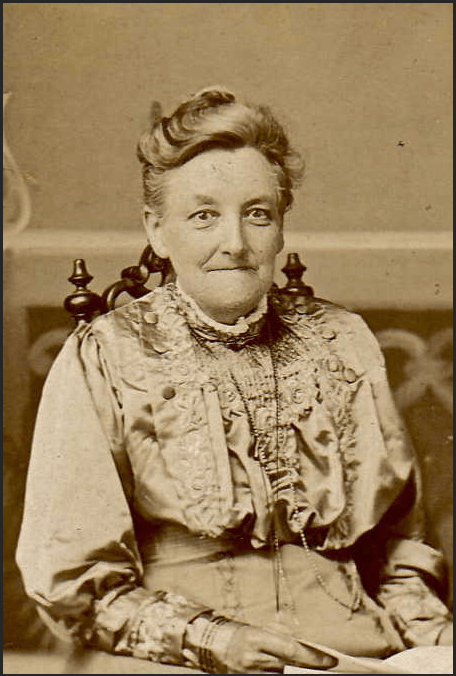
Sophia Grant
Sophia was born in 1845 in St Giles, Oxford where her father, William Grant, was a shoemaker with a shop in Little Clarendon Street. William and his wife, Sophia Burley, lived there with their four surviving children – three others died in infancy. By the time the letters were written, she had been married to gamekeeper John Howe for more than 40 years and had raised eight children of her own in the village of Bletchingdon, Oxfordshire. Her eldest son, Walter Howe, was my grandmother’s father.
The first of her letters is dated 4 November 1913, when my grandmother had just left home to work as a parlour maid. Sophia sympathises with her granddaughter and confesses that “I used to cry my eyes out when I went to bed every night for weeks when I first left home”. She reveals that she had gone ”to keep a little school” set up by a clergyman so that children didn’t have to walk 1½ miles to the next village, and she appears to have lived in some style at the Rectory, where there was a cook, housemaid and butler. She doesn’t name the village, but states that it was close to Bletchingdon which explains how she met her husband.
Sophia encourages my grandmother to learn all she can on the grounds that “it all comes in useful by and by” but also expresses the view that she should look for better work as soon as she can. She goes so far as to state “hang service, gentry are not worth serving”, a somewhat surprising sentiment for a woman in her position which clearly reflects the growing dissatisfaction with wages and conditions amongst the working classes at the time.
In the second letter, written on 17 January 1914, she refers to a family rift that was apparently caused by “a misunderstanding all round” related to the wedding of her daughter, Selina Howe, who had married William Bell in 1910. Sadly, there are no details of what actually happened but my great grandfather, Walter Howe, had apparently taken such offence that he had not written home since. Sophia remarks that “we were all sorry after when it was too late” but also reflects on the fact that “it was a very quiet wedding so he didn’t miss much”.
She also gives news of her other children, including Sophie whose husband JJ Radnage, played football for the Oxford City team, and reports that Sophie and her sisters-in-law regularly went to watch the matches where they got “a good seat on the stand and tea brought by one of the committee”.
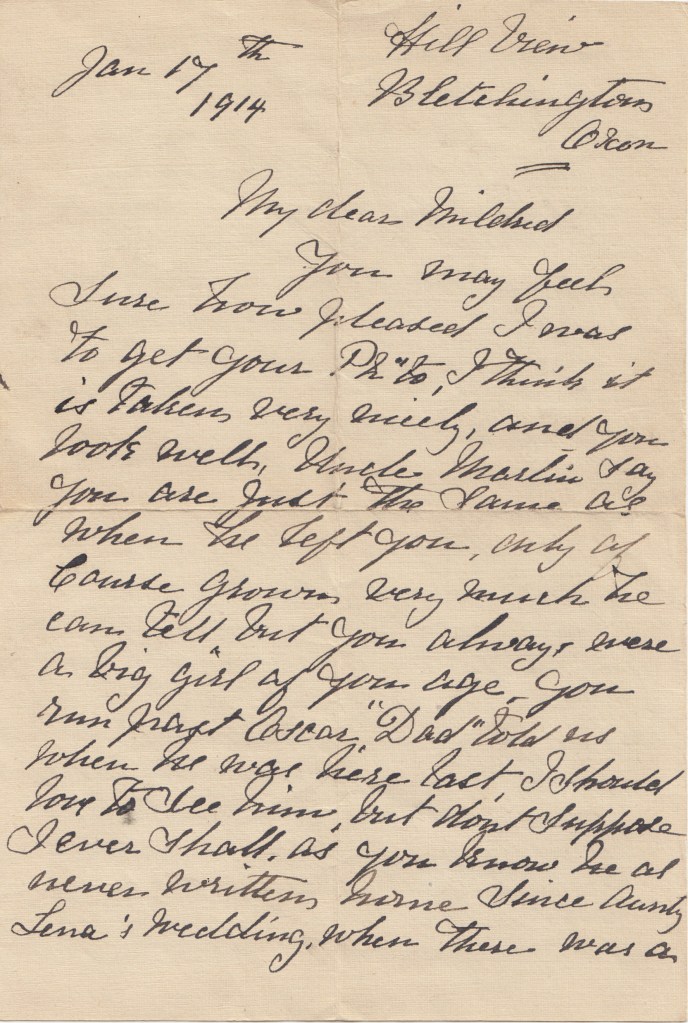
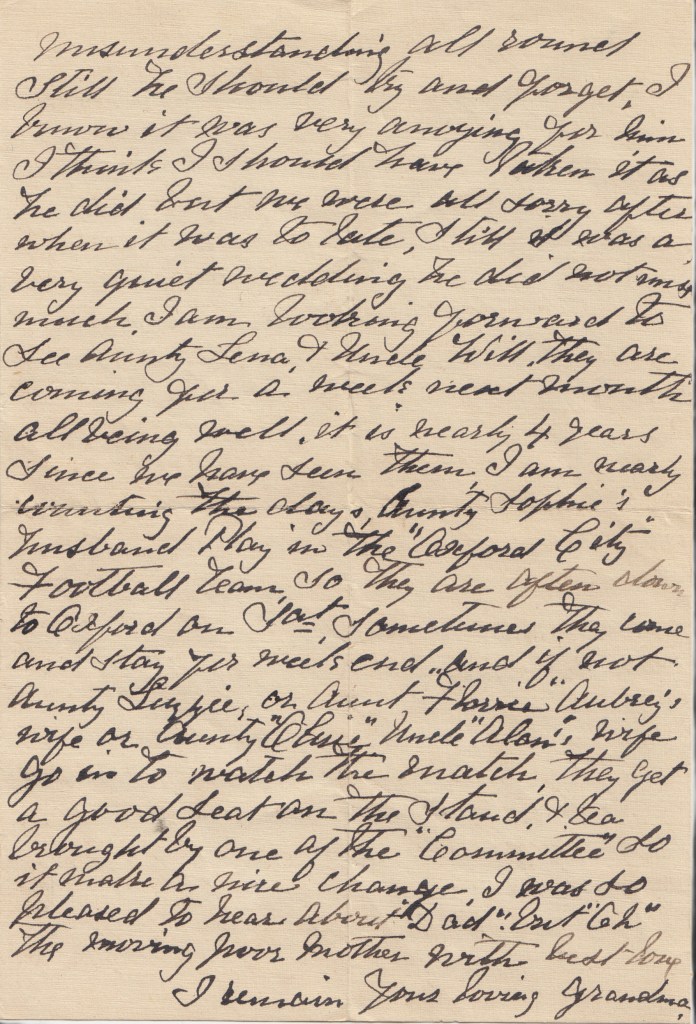
Letter written by Sophia Grant in 1914
The final letter I have is dated 12 December 1918. Sophia expresses the hope that she will be able to see my grandmother again now that the war is over but shares the news that she is unlikely to be able to visit the family herself as she is spending most of her time nursing her husband who has “had another slight stroke”. It appears, however, that the rift with Walter Howe has now been healed as she compares her husband’s condition to how he was when “dad” left him “lying in bed down in the parlour” on a recent visit.
As this letter was written soon after the Armistice, inevitably there are references to relatives who saw active service. JJ Radnage, has returned home from France, but my grandmother’s brothers had been less fortunate – Sophia writes that she has “dear Oscar’s photo on the mantelpiece” and that she “often shows the dear brave boy to our friends”. She closes by expressing the hope that my grandmother “will get good news from dear brother Jack”, which sadly was not to be.
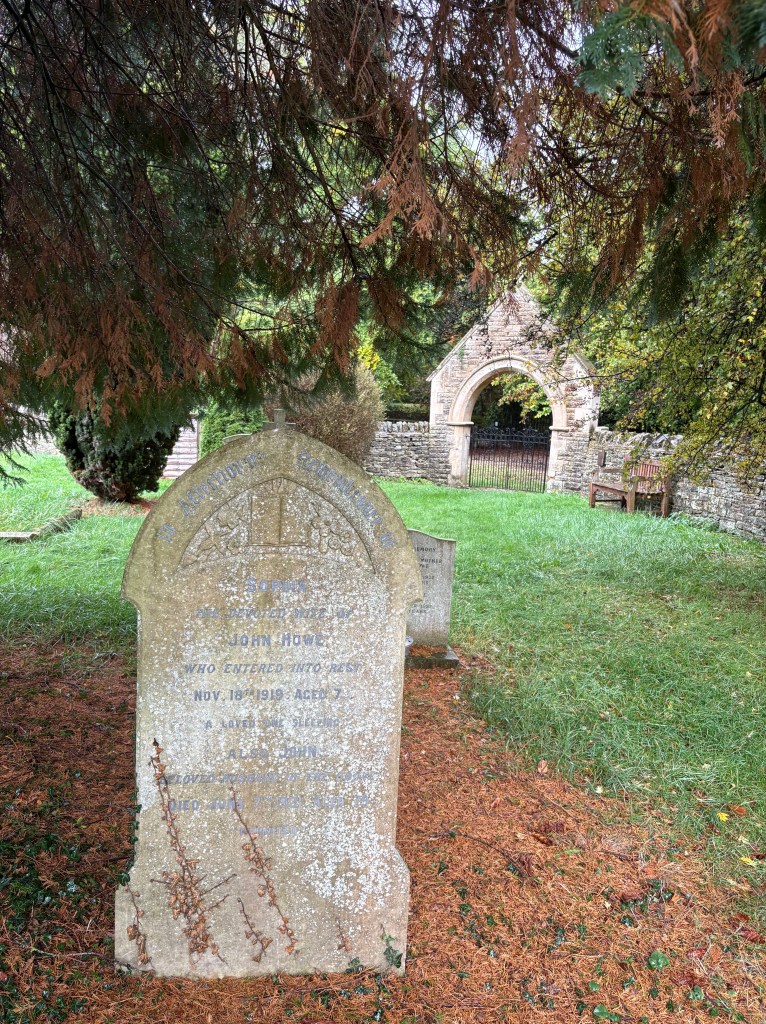
Sophia Grant died at her home in Bletchingdon on 18 November 1919, aged 74, and was buried in the nearby churchyard. Her husband’s obituary, published in June 1921, relates that “the rather sudden death of a devoted wife 18 months ago was a severe blow from which, in the autumn of life, he did not recover”.
 Sleuthing Notes