Despite the fact that I have now been researching my family history for almost 25 years, there are always new documents to be found and ancestral haunts to visit, so in this final post of the 52 Weeks challenge I’m going to reflect on the discoveries that stood out as particularly memorable during the past year.
I regularly go through my tree to see if any new records have become available or to check for anything I might have missed, and a few weeks ago this proved to be a fruitful exercise when I noticed that in 1911, my great great grandfather, John Clark, described his occupation as “Naval Reserve and Old Age Pensioner”.
Initially, a search for Royal Naval Reserve records seemed likely to end in disappointment as the National Archives website states that only a small sample of pre-1908 records survive, but miraculously these turned out to include one for John Clark covering 1872 – 1876.
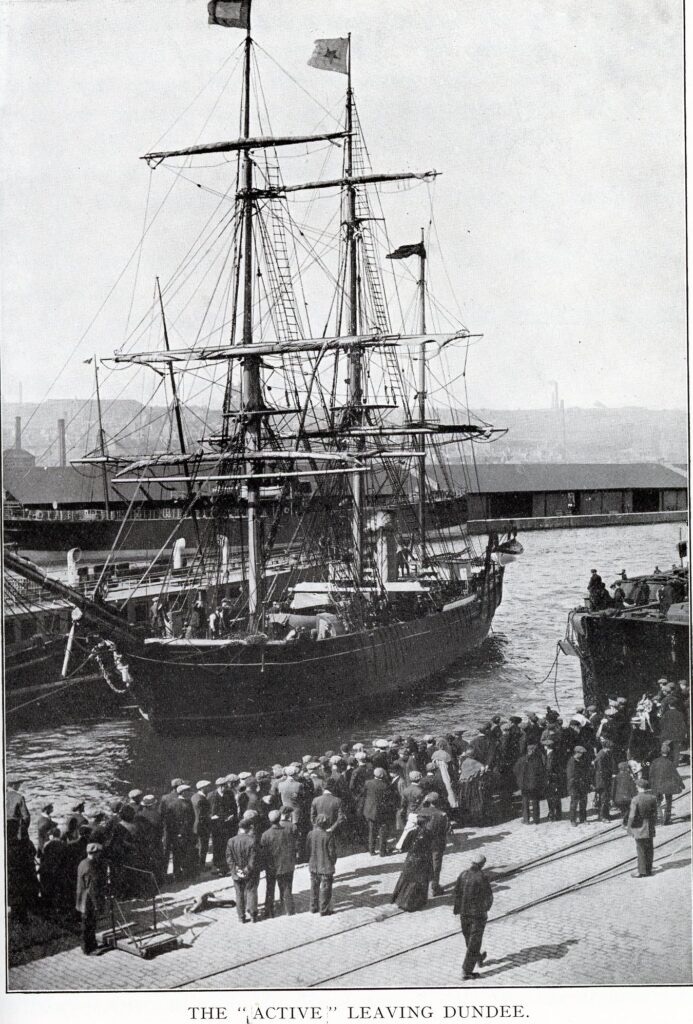
I have now added details to my post about his life as a Peterhead whaler, and anyone with an interest in the fleet will understand just how precious the list of ships he served aboard is, as so few crew lists have survived. A new project for next year will be to research the history of these ships and the many arduous voyages they made – an initial search has already yielded some wonderful photographs of the Active, on which I now know my great grandfather sailed to Greenland in 1872, 1873 and 1874 :
As always when researching family history, this discovery was tinged with “if only …” as the ledger notes that John Clark also appeared in two earlier versions, which would have covered the period from 1861 to 1871 – sadly, a genealogist must quickly learn to be grateful for the scraps that have survived rather than pining for those that have been lost !
A close second in the “most memorable documents” stakes would be the Valuation Rolls relating to John’s mother, Christian Clark, which I viewed at the National Records of Scotland research room on a visit to Edinburgh last month. The Rolls list all properties in Scotland subject to local taxes between 1855 – 1996 and, as they name the occupier, I was able to use them to work out that Christian must have moved from being a pauper in New Leeds in 1854, to renting a shop in Longate, Peterhead in 1855. Quite how she managed to do this remains a mystery.

Extract from the Valuation Roll for Peterhead Burgh, 1864
This extract from the 1864 Roll reveals that they can serve another useful purpose as Christian is listed here as “Widow Clark” whereas she was “Mrs Clark” until 1860, adding to the circumstantial evidence gleaned from other sources that suggests her absent husband, William Clark, probably died around that time. One day, I hope to be able to trace what happened to him after he left for Canada, and narrowing down his likely date of death will help greatly in this endeavour.
In terms of the most memorable new place visited, there are also two contenders, one in Aberdeenshire and one in Suffolk. Both are churches – although I am not a religious person, these ancient buildings and their burial grounds played a significant role in the lives of my ancestors and to visit them is literally to follow in their footsteps, cementing my sense of connection to them.
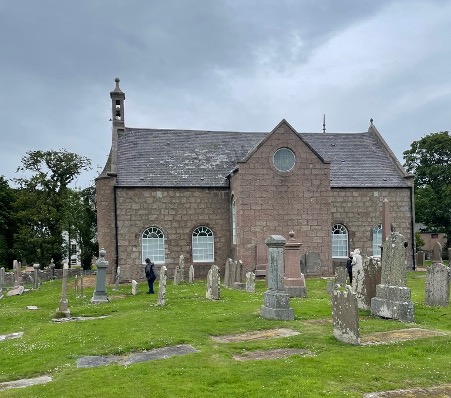
St Olaf’s Kirkyard, Cruden
Pictured above is St Olaf’s Church at Cruden in Aberdeenshire, where two sets of my 3x great grandparents are buried in the kirkyard: James McDonald and Mary Stewart, together with James Sim and Elizabeth Watson. If they ever had headstones, they have not survived, although the parish records provide some unusually detailed descriptions of where they lie – Elizabeth Watson is “2nd south from Thos Grays headstone” whilst the McDonalds are 2nd and 3rd “south from 1st tree at the still tire nixt the dyke”.
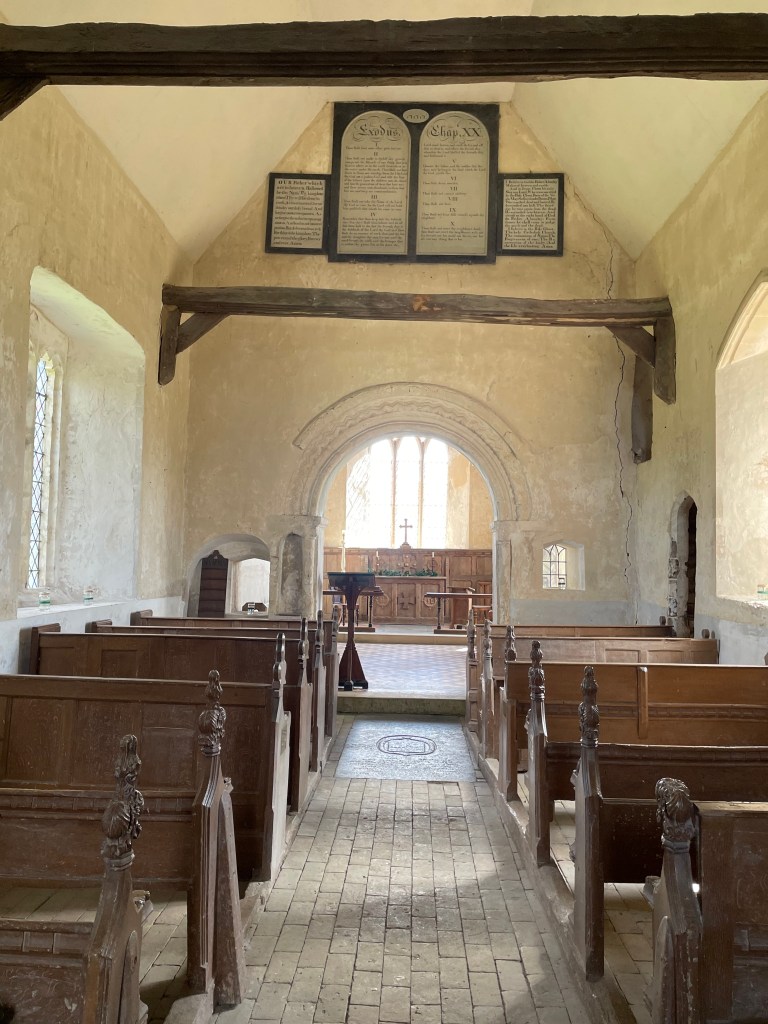
St John’s Church, Wantisden
If I was forced to select just one memorable event from 2025, however, it would be this final one – my long awaited visit to the little Norman church at Wantisden that was so nearly lost to the runway at Bentwaters airfield during WWII.
As I have already noted, this tiny parish was home to several generations of my maternal grandfather’s family, and many of the important events relating to this line in my family tree took place in front of the simple altar pictured above.
The parish records list births, marriages and deaths from 1829 – 1925: my 4x great grandmother, Ann Brown, is buried in the churchyard, along with four of my 3x great grandparents; my great great grandparents, William Page and Mary Fisher were married in the church, as were my great grandparents, Samuel Cullingford and Esther Page. My grandfather, William Jack Cullingford, was baptised there, and my mother, Ruth Cullingford, attended Sunday services with her granny during summer holiday visits.
This peaceful little church, which still stands isolated in the Suffolk fields where so many of my ancestors once worked, is particularly special to me. In addition to being the location where I can place the greatest number of those named in my tree, the story of my Great Aunt Muriel’s campaign to save it from demolition is one that my grandmother often told me and, as I was not fortunate enough to get to know my other grandparents, such fragments of first hand narrative are all the more precious.
 Sleuthing Notes